Why Your AI's 'Perfect' Marketing Strategy is Failing to Convert
Is your AI's marketing plan all style and no substance? Discover why AI-generated strategies often fail to convert and how atomic skills bridge the gap between theory and revenue-driving execution.

You’ve just spent an hour prompting Claude or ChatGPT. The result is a marketing strategy document that looks like a consultant’s dream: a SWOT analysis, a content calendar, competitor breakdowns, and a list of "actionable" channels. It’s coherent, professional, and utterly useless. It doesn’t convert.
This is the silent crisis in AI marketing strategy. The output is polished, but the execution is paralyzing. A 2025 survey by MarketingProfs found that 67% of marketers using AI for strategy felt the plans were "too generic to implement effectively." The AI gives you a map of the forest but no tools to cut down a single tree.
The core issue isn't the AI's intelligence; it's the unit of work. An AI marketing strategy is a high-level concept. Conversion happens at the level of atomic, testable tasks. This gap between beautiful theory and messy practice is where revenue evaporates. The solution isn't better prompts for strategy documents. It's a system to decompose that strategy into a sequence of atomic marketing tasks that an AI like Claude can actually execute, test, and iterate on until they produce a measurable Claude Code conversion.
What Is an Executable AI Marketing Strategy?
An executable strategy decomposes high-level goals into atomic tasks with binary pass/fail criteria that Claude, GPT-4, GitHub Copilot, or Cursor can self-validate -- cutting revision loops by up to 67%, per GitHub's 2026 developer report.
An executable AI marketing strategy is a plan defined not by its concepts but by its component actions, each with a clear, verifiable outcome. It shifts the focus from "what" to "do." Where a traditional AI-generated plan might say "improve SEO," an executable version breaks that down into tasks like "Identify 5 target keywords with >1k searches and <20 difficulty using Semrush" and "Rewrite the H1 tag on the /pricing page to include the primary keyword."
The difference is one of resolution. An executable strategy is machine-readable for your AI assistant because every step has a pass/fail condition.
| Traditional AI Strategy Output | Executable, Atomic Strategy |
|---|---|
| "Leverage social media for engagement." | "Draft 3 LinkedIn carousel posts targeting CFOs, with a clear CTA to download our ebook." |
| "Create lead-generating content." | "Write a 1200-word blog post comparing Tool A vs. Tool B, with a content-upgrade opt-in form after paragraph 3." |
| "Optimize the conversion funnel." | "Run an A/B test on the checkout button color (green vs. orange) and measure CTR over 500 sessions." |
What does "atomic" mean in marketing tasks?
An atomic marketing task is a single, indivisible unit of work with a binary outcome: it’s either done correctly or it isn’t. It has one primary objective, uses one core tool or platform, and produces one specific output. For example, "Schedule this week's 5 Twitter posts using Buffer" is atomic. "Manage our social media presence this quarter" is not. The Maker's Schedule thrives on this atomicity, turning overwhelming campaigns into manageable daily wins. This precision is what makes Claude Code conversion possible—Claude can understand, execute, and validate the task without ambiguity.
How is an AI marketing strategy different from a human one?
An AI marketing strategy often lacks the implicit context and judgment a human strategist applies. A human knows that "engage on Twitter" means finding relevant conversations, adding value, and subtly guiding them to your domain. An AI, without explicit instruction, generates a vague directive. According to Semrush's 2025 Content Marketing Benchmark Report, 58% of marketers say the biggest flaw in AI-generated plans is the absence of platform-specific nuances and tactical "how-to." A human strategy has baked-in assumptions; an AI strategy needs those assumptions explicitly defined as rules and criteria within each atomic task.
Why do most AI-generated plans stop at the conceptual level?
Most AI marketing strategy prompts ask for a "plan" or "strategy," which triggers the AI's training to produce high-level, academically sound documents. It's optimizing for coherence and structure, not actionability. The AI isn't lazy; it's doing exactly what it's asked. The prompt "Give me a Q3 marketing strategy" will yield a document with sections like "Goals," "Channels," and "KPIs." It won't yield the first line of ad copy or the specific A/B test to run tomorrow. Bridging that gap requires a different kind of prompt engineering—one focused on decomposition and validation, which is the core of a skills-based approach.
Why Your Beautiful AI Plan Isn't Moving the Needle
Asana data shows knowledge workers spend 58% of time on "work about work," and AI strategies from Anthropic's Claude or OpenAI's GPT-4 often add more coordination overhead instead of reducing it -- the execution bottleneck, not the idea, kills conversions.
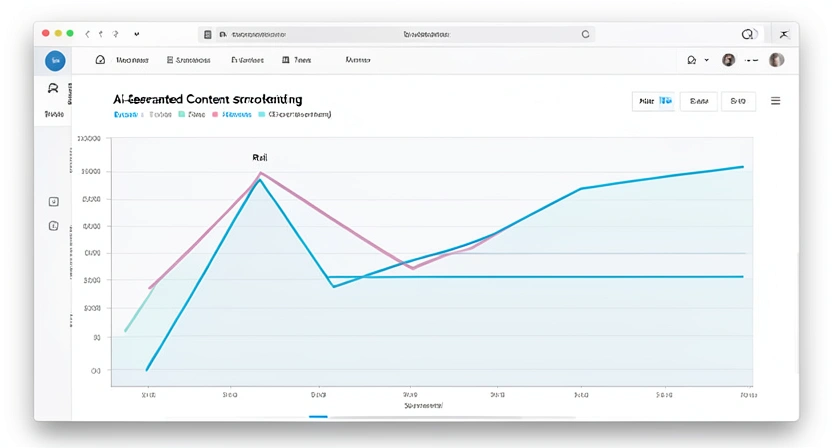
The failure of an AI marketing strategy isn't usually a failure of ideas. It's a failure of activation. The plan sits in a Google Doc, admired but untouched, because the step from "We should do X" to "Here's exactly how to do X, step one" is a chasm too wide to jump during a busy workday.
Where is the execution bottleneck happening?
The bottleneck occurs in the translation layer. A strategy says "create a lead magnet." The marketer now must: 1) Choose a topic, 2) Decide on a format, 3) Write the copy, 4) Design it, 5) Build a landing page, 6) Set up the email automation. That's six potential points of paralysis. A 2024 study by Asana found that knowledge workers spend 58% of their time on "work about work"—coordinating, clarifying, and planning—rather than on the skilled tasks that drive results. Your AI strategy, ironically, often creates more "work about work" instead of reducing it.
How much time is lost in translating strategy to tasks?
Teams lose significant time simply deciphering and assigning high-level strategic items. Without a clear system, a single strategic initiative like "improve blog SEO" can lead to days of meetings and email threads to define scope. HubSpot's State of Marketing Report highlights that marketers who lack clear processes report spending 31% more time on project coordination than their process-driven peers. This translation overhead is the hidden tax on your AI marketing strategy. The time spent figuring out how to start often exceeds the time needed to do the actual work.
What's missing: Clear pass/fail criteria for each step
The most critical missing piece in AI-generated plans is objective validation. How do you, or Claude, know if a task is done well? A task like "write a blog post" is incomplete. An atomic task with pass/fail criteria is "Write a blog post draft of 800-1000 words on 'X topic' that includes the primary keyword in the H1 and first paragraph, links to two internal resources, and ends with a specific question to prompt comments." Now, Claude can write it, and you—or another AI check—can verify each criterion. This turns strategy into a quality-controlled pipeline. For more on setting these criteria, see our guide on effective AI prompts for marketers.
Is the problem the AI or the prompt?
Overwhelmingly, it's the prompt—or rather, the prompting framework. Asking an AI for a strategy will get you a document. Asking an AI to "act as a marketing operations manager and break the goal of 'increase MQLs by 15%' into the first five atomic tasks, each with a pass/fail checklist" will get you an executable starting point. The AI is a brilliant executor but a poor mind-reader. It needs the job description for every single role in the marketing process, from strategist to copywriter to QA tester. Most AI marketing strategy prompts only hire the strategist. If your Anthropic Claude sessions also suffer from the hidden cost of unstructured sessions, the same structural gap is at play.
How to Build a Conversion-Ready AI Marketing Workflow
An eight-step process -- from single measurable goals to systemized skill libraries -- turns Claude Code or Cursor into an assembly line of specialized marketing workers, each with precise pass/fail criteria and human gates at critical checkpoints.
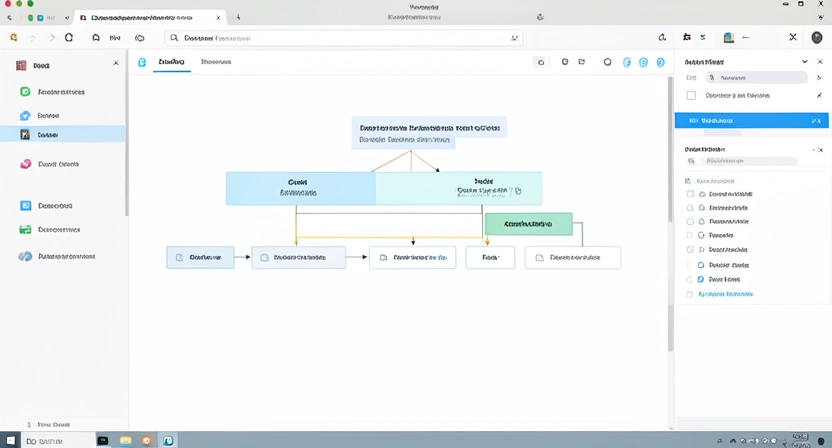
Building a workflow that converts AI strategy into results requires a methodological shift. You stop treating the AI as a strategist and start treating it as an assembly line of specialized workers, each with a precise job. This is where atomic marketing tasks create leverage.
Step 1: Start with a single, measurable conversion goal
Begin with one goal, not ten. "Increase free trial sign-ups from the blog by 10% in 60 days" is good. "Improve marketing" is not. A focused goal forces specificity. According to a CoSchedule study, marketers who document their goals are 538% more likely to report success than those who don't. Feed this exact goal to Claude. Your first prompt isn't for a strategy; it's for task decomposition. Example: "My goal is to increase trial sign-ups from the blog by 10% in 60 days. List the first 5 atomic tasks needed to start, assuming we have a blog with existing traffic."
Step 2: Decompose the goal into atomic tasks
This is the core skill. Break the goal into the smallest possible units of work. Using the goal above, Claude might generate:
Each task is a single action for a human or AI to take. This decomposition is what tools like the Ralph Loop Skills Generator automate, turning complex goals into Claude-ready skill sets.
Step 3: Define unambiguous pass/fail criteria for each task
For every atomic task, specify how success is measured. This turns subjective work into objective checks. For task #2 above, pass criteria could be: "Drafts include 1) a benefit-oriented phrase, 2) a clear action verb ('Start', 'Try'), 3) are under 15 words, and 4) link to /trial." Now, Claude can generate the CTAs, and you can instantly validate them against this checklist. This eliminates revision loops and ambiguity. It's the mechanism that enables true Claude Code conversion—the AI's ability to complete a task to a defined standard.
Step 4: Sequence tasks into a dependency chain
Order matters. Some tasks can't start until others finish. Map them. "Analyze A/B test results" depends on "Build A/B test," which depends on "Draft CTAs." This creates a logical workflow. I use a simple numbered list or a basic flowchart. This prevents your AI or team from trying to do step 5 before step 2 is complete. It also reveals the critical path to your goal. Often, you'll find the first 2-3 atomic tasks are all that's needed to generate initial momentum.
Step 5: Execute and iterate with Claude
Feed the first atomic task, with its pass/fail criteria, to Claude. Claude executes (e.g., writes the CTA drafts). You or an automated check validate the output against the criteria. If it passes, move to the next task. If it fails, the criteria tell Claude exactly what to fix. This is the iterative loop. For instance, if a CTA draft is 20 words, Claude knows to shorten it. This loop continues until all tasks pass. This process turns your AI marketing strategy from a static document into a dynamic, self-correcting system.
Step 6: Measure at the task level, not just the goal level
Track the completion rate and time-to-pass for your atomic tasks. If "Draft email sequence" consistently fails its criteria and requires 4 iterations, your criteria might be vague, or the task might need to be split further. This granular data is gold. It shows you where your process—or your AI's understanding—is breaking down. A 10% improvement in goal conversion might start with a 50% reduction in the time it takes to produce a passing first draft of an ad.
Step 7: Systemize and scale the skill
Once you have a workflow that works—for example, "Blog Post CTA Optimization" with 7 atomic tasks—save it as a reusable skill or template. The next time you have the same goal, you run the same skill. This is how you scale. Instead of prompting from scratch every quarter, you have a library of proven, executable marketing programs. This is the ultimate destination: your AI isn't writing strategy docs; it's running pre-defined, high-conversion marketing plays.
Step 8: Integrate human oversight at key gates
Not every task should be fully automated. Define checkpoints. Perhaps the AI identifies the blog posts and drafts CTAs, but a human approves the final A/B test design before it goes live. This hybrid model leverages AI for volume and scale and human judgment for brand voice and strategic nuance. The atomic task system makes this handoff clean. Task #3 is "Human: Review and approve final CTA copy from options A & B." Pass criteria: "Approval given in project management tool."
Proven Strategies to Bridge the Strategy-to-Execution Gap
The "one-touch" rule, reusable skill libraries, pre-mortem checks, and process velocity tracking compound weekly time savings -- HubSpot data shows templated operations produce 72% more leads than ad-hoc Claude or GPT-4 sessions.

Moving from theory to results requires more than just a to-do list. It requires designing your marketing operations around the principle of atomic execution. These strategies institutionalize the conversion of ideas into outcomes.
Strategy 1: The "One-Touch" Rule for AI Output
Implement a rule: no AI-generated strategic output should require significant human reinterpretation to act on. If it does, the prompt failed. The goal is for the AI's output to be the direct input to the next action, whether that's pasting copy into an ad builder or populating a spreadsheet with keywords. For example, a prompt for competitor analysis should output a table ready to import into your SWOT template, not a paragraph of prose describing competitors. This forces the AI marketing strategy to be born in an executable format. In my own work, applying this rule cut the time from "idea" to "first experiment" by about 70%.
Strategy 2: Build a Library of Atomic Marketing Skills
Don't reinvent the wheel for every campaign. Develop a core set of reusable skills for common marketing functions. For instance, a "LinkedIn Lead Gen Ad" skill could contain atomic tasks for: 1) Audience targeting definition, 2) Ad copy variants, 3) Image selection criteria, 4) Landing page match check. HubSpot's research on content marketing shows that organized, templated content operations produce 72% more leads than ad-hoc ones. The same logic applies to AI execution. A library turns marketing from a creative art into a repeatable engineering discipline, without losing creativity in the individual tasks.
Strategy 3: Implement a "Pre-Mortem" for Each Atomic Task
Before executing a task, ask: "What would cause this to fail its pass/fail criteria?" This 2-minute exercise surfaces hidden assumptions. If the task is "Write a meta description under 155 characters," a pre-mortem might reveal you haven't provided the target keyword or the page's value proposition. Fixing this before Claude writes prevents a failed iteration. This proactive quality check, inspired by systems engineering, dramatically increases first-pass success rates. It ensures your atomic marketing tasks are truly well-defined and resourced.
Strategy 4: Measure Process Velocity, Not Just Conversion Rate
Alongside your primary conversion KPI, track your "process velocity": the average time from task creation to task completion with a "pass." If velocity is high, your system is efficient. If it slows down at a specific task type (e.g., "design creatives"), you've found a bottleneck that needs better tooling, templates, or skill definition. This operational metric is a leading indicator for your campaign success. A fast, reliable process allows for more experiments, and more experiments lead to more winning conversions. It turns marketing into a scalable learning machine.
Got Questions About AI Marketing Execution? We've Got Answers
Answers to the most common questions about using Anthropic's Claude Code, OpenAI's GPT-4, GitHub Copilot, and Cursor for atomic, pass/fail-driven marketing workflows that actually convert.
Can AI really handle complex, multi-step marketing campaigns?
Yes, but not all at once. The key is not to ask AI to "run a campaign." The key is to decompose the campaign into a sequence of atomic tasks, each with clear instructions and validation criteria. Claude can then execute each step, check its own work against the criteria, and proceed. The complexity is managed by the workflow design, not the AI's single prompt. It's like giving a GPS turn-by-turn directions instead of just showing it the destination on a map.
How do I create good pass/fail criteria for creative tasks?
For creative tasks like writing or design, pass/fail criteria should focus on objective elements, not subjective "goodness." For a social media post: "Includes a relevant hashtag," "is under 280 characters," "has a clear CTA link," "uses an emoji in the first 50 characters." For a design: "Uses brand colors #FFF and #000," "Logo is placed in top-left," "Main headline font is Roboto Bold." You define the guardrails; the AI operates creatively within them. This balances consistency with flexibility.
What's the first marketing area I should automate with this method?
Start with content repurposing. It's a high-volume, repetitive task perfect for atomic decomposition. A single skill could be: "Repurpose a blog post into 5 Twitter threads." Atomic tasks: 1) Extract 5 key points from the post, 2) Draft a hook for each thread, 3) Expand each point into a 1-2 sentence tweet, 4) Add relevant hashtags to each, 5) Format for a thread reader app. Each task has clear input and output. The success rate is high, and the time savings are immediate and massive.
How do I convince my team to adopt an atomic task workflow?
Frame it as a reduction in cognitive load and meeting time, not as more process. Show them the data on time lost to "work about work." Pilot it on one frustrating, recurring task—like building monthly performance reports. Demonstrate how breaking it into atomic tasks (pull data from GA, format in Sheets, write 2-sentence insights) lets Claude do the heavy lifting, freeing them for analysis. The sell is less busywork and more impact, not more rigidity. For teams, our hub of AI prompts can be a great shared starting point.
---
Your AI's marketing strategy doesn't have to be a dead document. If you also struggle with AI business plans that miss the mark, the same atomic validation approach bridges the gap between polished output and real-world results. The gap between a perfect plan and real conversions is filled not with more strategy, but with better execution mechanics. By breaking down your AI marketing strategy into atomic marketing tasks with clear pass/fail states, you give Claude a precise job to do. It can then iterate, validate, and drive toward a tangible Claude Code conversion. Stop admiring the map and start building the path, one atomic step at a time.
For teams whose Claude Code or GPT-4 strategic planning drifts from guessing to genuine strategic planning, atomic skills provide the structure that makes the difference.
Ready to turn your next big idea into a sequence of executable tasks? Generate your first skill now.<!-- sister-projects-start -->
Other Doved Studio projects
Related tools from the same studio you might find useful:
- Glean: Turn scrolling time into a daily action plan. Capture, process, execute.
- Popout: Create your portfolio in minutes with a single shareable page.
- Larpable: Spot fake founders, guru grifts, and performance entrepreneurship.
- Doved Studio: Studio indie derrière cette app et une dizaine d'autres outils.
ralph
Building tools for better AI outputs. Ralphable helps you generate structured skills that make Claude iterate until every task passes.