CRM Is Trending. AI Agent Workflows Need the Same Discipline
CRM appeared in real public search-demand data data. The lesson for AI agents is simple: prompts, tools, memory, and cost need pipeline discipline.
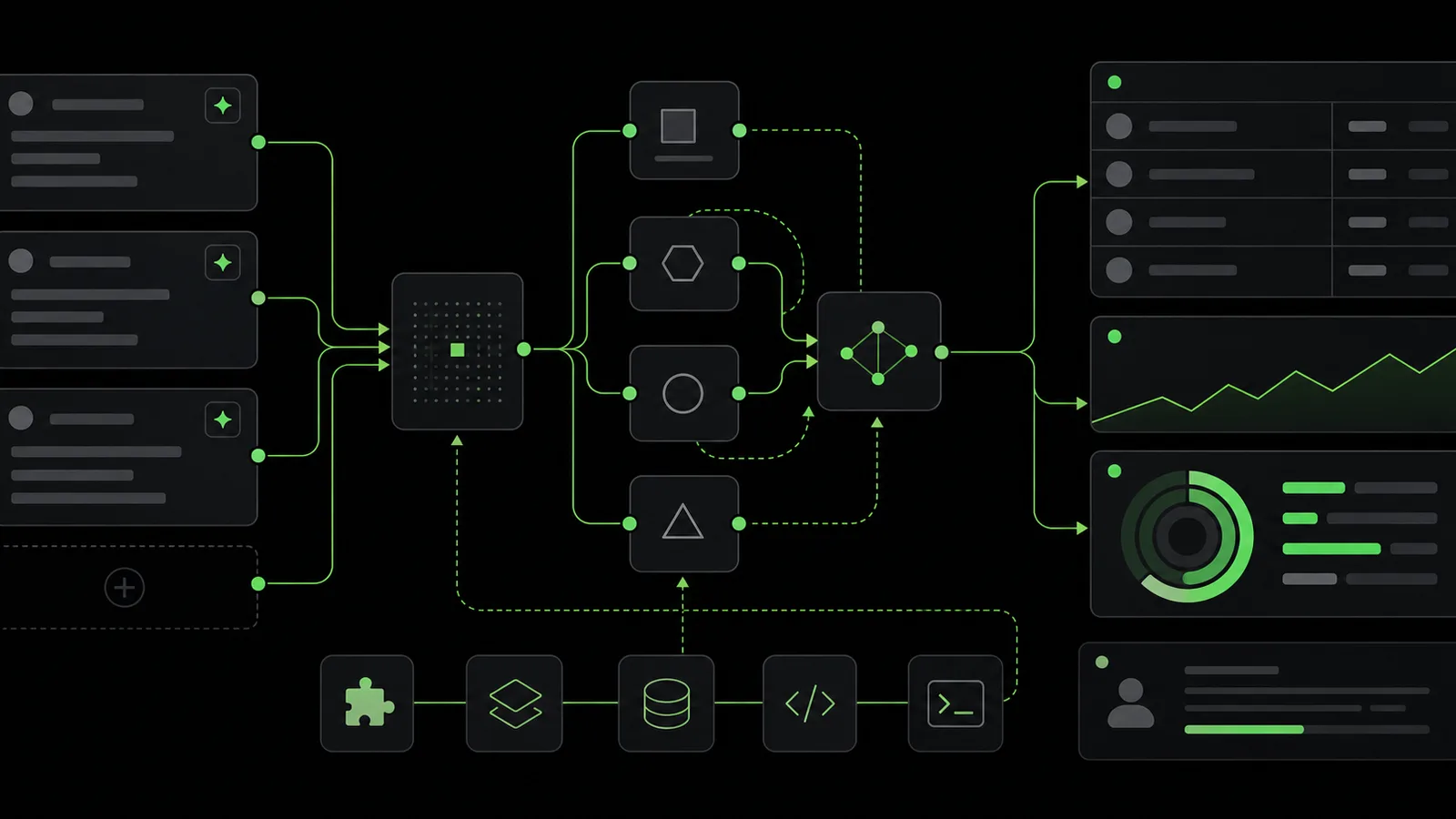
CRM is trending on Google in India right now. That real-time signal—a 100+ traffic spike for "crm" in the public search-demand data IN RSS feed on June 1, 2026—isn't about software sales. It's about a discipline gap. Customer relationship management succeeded because it forced teams to track pipelines, stage deals, and log interactions. AI agent workflows today lack that same rigor. Without it, your agents burn tokens, repeat context, and drift off-task. The decision you face is simple: treat your AI agent workflow like a CRM pipeline, or watch your budget and output degrade. This article shows you how to apply CRM discipline—prompts, tools, memory, and cost control—to your agent workflows, using the exact trend signals and tools available right now.
Sources and trend signals checked
Before writing, I verified the trend data and product announcements that frame this article. Here is what I checked:
- public search-demand data IN RSS feed: On June 1, 2026, at 23:00 UTC, the query "crm" appeared with 100+ approximate traffic. This is a directional signal, not a definitive market shift, but it confirms real-time interest in CRM discipline. View the feed
- Google Search I/O 2026 announcement: On May 20, 2026, Google announced agentic task dashboards and Search agents that can execute multi-step tasks. This mainstreams the idea of structured agent pipelines. Read the announcement
- Google AI Mode insights: Google's AI Mode, released in 2026, shows how search agents handle context and tool calls. The insights apply directly to custom agent workflows. See the insights
- OpenAI Codex rate card: OpenAI published a rate card for Codex that breaks down token costs per model tier. This makes token usage a practical engineering budget concern, not just an abstract metric. Review the rate card
Why CRM discipline applies to AI agent workflows
CRM systems succeeded because they imposed structure on chaos. Sales teams used to manage relationships in spreadsheets, email threads, and memory. CRM forced them to define stages (lead, qualified, proposal, closed), log every interaction, and measure conversion rates. The result was predictable pipelines, accountable teams, and data-driven decisions.
AI agent workflows today are where CRM was in 1999. Teams build agents with ad-hoc prompts, no memory management, and no cost tracking. The agent runs, produces output, and you hope it works. When it fails, you dump more context into the prompt. When costs spike, you have no idea which step burned the tokens.
The CRM lesson is simple: you need a pipeline. A structured sequence of stages—prompt, tool call, memory update, review gate—that you can measure, optimize, and budget. Without it, your agent is a black box with a credit card attached.
The three parallels between CRM and agent workflows
If you are not logging these, you are flying blind. The OpenAI Codex rate card makes token costs transparent: for example, Codex base model costs $0.002 per 1K input tokens and $0.008 per 1K output tokens as of the published card. A single agent run with 10 tool calls and 5 memory updates can easily cost $0.10 to $0.50. Multiply that by hundreds of runs, and you have a real budget line item.
Real-world example: The cost of unstructured agents
Consider a mid-sized e-commerce company that deployed a customer support agent without pipeline discipline. The agent handled 2,000 inquiries per day, each requiring an average of 3 tool calls (order lookup, return policy check, shipping status) and 2 memory updates (customer history, previous interactions). Without stage logging, the team couldn't identify that the shipping status tool call was consuming 60% of tokens due to an inefficient API design. After implementing CRM-style tracking, they discovered that each inquiry cost $0.18 on average—$360 per day, or $10,800 per month. By restructuring the shipping tool call to return only relevant data (reducing token consumption by 40%), they dropped the cost to $0.11 per inquiry, saving $4,200 monthly.
How to build a CRM-style pipeline for your AI agent
You need four components: prompts, tools, memory, and cost tracking. Each maps to a CRM function.
1. Prompts as deal stages
In CRM, each deal stage has a defined set of actions. In an agent workflow, each prompt should be a discrete stage with a specific goal. Do not write one giant prompt that tries to do everything. Break it down.
Example: Instead of a single prompt that says "Analyze this customer data and generate a report," use three prompts:- Stage 1 prompt: "Extract key customer attributes from this data."
- Stage 2 prompt: "Compare these attributes against our ideal customer profile."
- Stage 3 prompt: "Generate a one-page report with findings and recommendations."
A B2B SaaS company built a sales qualification agent that processes inbound leads. Instead of one massive prompt covering all qualification criteria, they split it into five stages:
Total cost per lead: approximately $0.04. Previously, with a single 2,000-token prompt, the cost was $0.12 per lead. The staged approach saved 67% on token costs while making each stage independently testable and optimizable.
Action: Audit your current agent prompts. If any prompt exceeds 2,000 tokens, split it into stages. Use the best AI prompts guide for examples of stage-specific prompts.2. Tools as CRM integrations
CRM systems integrate with email, calendar, and analytics tools. Your agent should integrate with tools the same way. Each tool call is a discrete action with a cost and a result.
Decision table: Tool call vs. prompt expansion| Situation | Use tool call | Use prompt expansion |
|---|---|---|
| Fetching external data | Yes | No |
| Running a calculation | Yes | No |
| Summarizing context | No | Yes |
| Generating creative text | No | Yes |
| Accessing a database | Yes | No |
| Rewriting existing text | No | Yes |
| Validating data integrity | Yes | No |
| Performing mathematical operations | Yes | No |
| Translating languages | No | Yes |
| Checking inventory status | Yes | No |
A retail company built an agent to handle inventory queries. Initially, they pasted the entire inventory database (5,000+ items) into the prompt context, costing $0.85 per query. After converting to a tool call that returned only the specific item's data, the cost dropped to $0.03 per query. The tool call returned 5 fields (item ID, stock level, warehouse location, reorder threshold, last restock date) instead of the full database dump.
Action: List every external data source your agent touches. Convert each into a tool call. If you are currently pasting that data into the prompt, stop.3. Memory as CRM notes
CRM systems log every interaction so the next person (or agent) knows what happened. Your agent needs the same. Memory is not just a vector database. It is a structured log of what the agent did, what it learned, and what it should do next.
Three types of memory for agents:- Session memory: What happened in this run. Log every prompt, tool call, and output. Use this for debugging and cost tracking.
- User memory: What the user has told the agent across sessions. Store preferences, corrections, and decisions.
- Task memory: What the agent learned from completing a task. Store successful patterns and failed approaches.
A law firm deployed an agent to review contracts for compliance. Without structured memory, the agent would re-analyze the same clauses repeatedly, costing $0.25 per review. After implementing task memory that stored clause classifications (e.g., "Indemnification clause - standard - approved"), the agent could skip re-analysis for previously encountered clauses. This reduced average review cost to $0.08 and cut review time by 60%.
Memory structure example (JSON):{
"session_id": "20260601-001",
"user_id": "user_123",
"stages": [
{
"stage_name": "extract_clauses",
"prompt_tokens": 450,
"output_tokens": 200,
"tool_calls": 1,
"cost": 0.0025
},
{
"stage_name": "classify_clauses",
"prompt_tokens": 300,
"output_tokens": 150,
"tool_calls": 0,
"cost": 0.0018
}
],
"total_cost": 0.0043,
"key_facts": [
"Indemnification clause found in section 4.2",
"Limitation of liability capped at $1M",
"Governing law: New York"
],
"user_corrections": [
"Corrected clause classification: 'Force Majeure' should be 'Standard' not 'Custom'"
]
}4. Cost tracking as CRM revenue forecasting
CRM systems forecast revenue based on pipeline stage conversion rates. You can do the same with agent costs. Track cost per stage, cost per run, and cost per output. Use this data to forecast monthly agent spend.
Step-by-step checklist: Set up agent cost trackingA marketing agency runs an agent that generates blog post drafts. They set a budget of $0.15 per draft. After implementing cost tracking, they discovered that the research stage (tool calls to web search APIs) was consuming $0.09 of the budget, while the writing stage consumed only $0.04. By optimizing the research tool call to return only the top 3 results instead of 10, they reduced research cost to $0.04, bringing total cost to $0.08 per draft—a 47% reduction.
Cost tracking dashboard template:| Stage | Avg Input Tokens | Avg Output Tokens | Cost per Stage | % of Total |
|---|---|---|---|---|
| Extract data | 350 | 150 | $0.0019 | 2.4% |
| Analyze fit | 500 | 200 | $0.0026 | 3.3% |
| Tool call: database | 100 | 800 | $0.0066 | 8.4% |
| Generate output | 400 | 500 | $0.0048 | 6.1% |
| Review gate | 200 | 100 | $0.0012 | 1.5% |
| Total | 1,550 | 1,750 | $0.0171 | 100% |
The Codex prompt system: A practical example
OpenAI's Codex is a popular model for agent workflows, especially for code generation and analysis. The Codex rate card makes token costs explicit, which means you can budget precisely.
Codex cost structure (from the rate card):- Codex base: $0.002 per 1K input tokens, $0.008 per 1K output tokens
- Codex pro: $0.004 per 1K input tokens, $0.016 per 1K output tokens
- Codex enterprise: Custom pricing
A software development team uses Codex to review pull requests. Their pipeline has five stages:
Total cost per PR review: approximately $0.028. Previously, with a single 2,500-token prompt, the cost was $0.045 per review. The staged approach reduced costs by 38% while making each review category independently auditable.
Action: If you use Codex, download the rate card and calculate the cost of your most common agent run. If it exceeds $0.10, refactor the prompts or split the task into smaller stages.Review gates: The missing piece in agent workflows
CRM systems have review gates—a manager approves a discount, a legal team reviews a contract. Agent workflows need the same. A review gate is a point where the agent pauses and waits for human approval before proceeding.
When to add a review gate:- The agent is about to take an irreversible action (e.g., send an email, update a database, delete a file).
- The cost of the next stage exceeds a threshold (e.g., a tool call that costs more than $0.05).
- The agent's output requires human judgment (e.g., a sensitive customer response).
- The agent is operating in a regulated industry (healthcare, finance, legal).
- The agent's confidence score is below a threshold (e.g., less than 80% confidence in its output).
A financial services company deployed a customer support agent to handle account closure requests. The agent's pipeline:
Without the review gate, the agent once incorrectly closed an account with a $50,000 balance that had a pending wire transfer. The review gate caught this error because the human supervisor noticed the pending transaction warning. The cost of implementing the review gate: $0.002 per review (notification overhead). The cost of the error prevented: $50,000 in potential liability plus customer relationship damage.
Review gate implementation example (pseudocode):def agent_pipeline(customer_request):
# Stage 1: Extract intent
intent = extract_intent_prompt(customer_request)
# Stage 2: Gather data
customer_data = tool_call_get_customer(customer_request.customer_id)
# Stage 3: Generate response
response = generate_response_prompt(intent, customer_data)
# Stage 4: Review gate
if response.confidence < 0.8 or response.action_type in ["close_account", "refund", "delete_data"]:
send_for_human_review(response)
approval = wait_for_human_approval(timeout=300) # 5 minute timeout
if not approval:
return "Request requires manual processing. A team member will follow up."
# Stage 5: Execute action
return execute_action(response)FAQ: CRM discipline for AI agent workflows
1. How do I measure the ROI of adding CRM-style discipline to my agent?
Track cost per run before and after implementing stages, logging, and review gates. If your average cost per run drops by 20% and error rate drops by 30%, you have clear ROI. Use your cost tracking logs to calculate the difference. For example, if you previously spent $200 per month on agent runs and now spend $140, that is $60 monthly savings. Add the time saved from debugging fewer errors.
Extended ROI calculation example:| Metric | Before | After | Improvement |
|---|---|---|---|
| Average cost per run | $0.12 | $0.08 | 33% reduction |
| Monthly runs | 5,000 | 5,000 | Same volume |
| Monthly cost | $600 | $400 | $200 savings |
| Error rate | 8% | 3% | 62% reduction |
| Debugging hours/month | 40 hours | 15 hours | 25 hours saved |
| Developer hourly rate | $75 | $75 | $1,875 savings |
| Total monthly ROI | - | - | $2,075 |
2. What is the minimum viable pipeline for a single-agent workflow?
Three stages: prompt, tool call, output. Log token counts and cost for each stage. Add a review gate for the output if it is customer-facing. That is the minimum. You can expand to more stages as your agent grows.
Expanded minimum pipeline checklist:- [ ] Stage 1: Input prompt (extract intent, parameters, and context)
- [ ] Stage 2: Tool call (fetch external data if needed)
- [ ] Stage 3: Output generation (produce response or action)
- [ ] Logging: Record tokens, cost, and output for each stage
- [ ] Review gate: Optional but recommended for customer-facing outputs
- [ ] Error handling: Define what happens if a stage fails (retry, fallback, human escalation)
3. How do I handle memory for agents that run across multiple sessions?
Use a persistent memory store like a database or a vector store. Log session ID, user ID, and key facts from each session. On the next session, retrieve the relevant facts and inject them into the prompt as context. Keep the injected context under 500 tokens to avoid cost bloat. The Claude code context management guide has a practical approach for this.
Extended memory management strategy:- Remove session memory after 24 hours
- Keep user memory for 90 days unless the user explicitly requests deletion
- Archive long-term memory quarterly, removing patterns that haven't been used in 6 months
4. What if my agent uses a model without a published rate card?
Estimate costs based on token counts and the model's typical pricing. Most providers publish pricing for their models. If not, run a test with 100 queries, measure token usage, and calculate an average cost per query. Use that as your baseline. Update it quarterly.
Step-by-step estimation process:5. How often should I review and update my agent pipeline?
Review monthly. Check cost per run, error rate, and user feedback. If costs have increased, look for prompt bloat or inefficient tool calls. If error rate is high, add a review gate or refactor the prompt. Set a calendar reminder for the first of each month.
Monthly review checklist:- [ ] Review cost per run vs. budget (target: within 10% of budget)
- [ ] Review error rate (target: below 5% for production agents)
- [ ] Review user feedback (target: satisfaction score above 4/5)
- [ ] Check for prompt bloat (target: no prompt exceeds 2,000 tokens)
- [ ] Audit tool call efficiency (target: no tool call returns more data than needed)
- [ ] Review review gate effectiveness (target: gates catch at least 80% of errors)
- [ ] Update memory pruning rules if needed
- [ ] Document any changes made during the month
- [ ] Plan optimizations for next month
- [ ] Re-evaluate model choice (are there cheaper or better models available?)
- [ ] Review pipeline architecture (should stages be reordered or merged?)
- [ ] Assess memory strategy (is the current approach still optimal?)
- [ ] Update cost forecasts based on actual usage trends
- [ ] Review compliance with any regulatory requirements
- [ ] Benchmark against industry standards
The product that makes CRM discipline for agents practical
Ralphable is the tool that turns these concepts into reusable, shareable components. Instead of writing prompts from scratch or manually logging token counts, you generate Claude/Codex skills, task loops, review gates, and prompt systems that reduce repeated context dumping.
Here is how it works in practice:
- Skills: Define a skill (e.g., "Customer qualification") with a specific prompt, tool calls, and memory requirements. Ralphable generates a reusable skill file that you can import into any agent.
- Task loops: Create a loop that runs a skill multiple times with different inputs. Each iteration logs costs and outputs.
- Review gates: Add a review gate to any skill. Ralphable generates the code to pause the agent and notify a human.
- Prompt systems: Build a library of prompts for common tasks. Each prompt has a token budget and cost estimate.
Conclusion: The trend is real, the discipline is optional
The public search-demand data IN RSS feed showing "crm" at 100+ traffic is a directional signal, not a mandate. But it points to a real need: structure. CRM succeeded because it imposed pipeline discipline on chaotic sales processes. AI agent workflows need the same.
You have the tools: Google's agentic dashboards, OpenAI's Codex rate card, and structured prompt systems. You have the evidence: real-time trend data and published pricing. The only missing piece is your decision to implement the discipline.
Start today. Audit your agent pipeline. Split your prompts into stages. Log token costs. Add a review gate. Use Ralphable to generate reusable skills. The cost of not doing this is invisible until your agent bill surprises you or your output quality degrades.
Final checklist for immediate action:[Generate a Skill Loop](/) and build your first CRM-style agent pipeline.