Claude Code vs Codex CLI in 2026: Skills, AGENTS.md and Review Loops Compared
A practical comparison of Claude Code and Codex CLI workflows for reusable skills, repo instructions, MCP tools, review packets and safe mobile approvals.
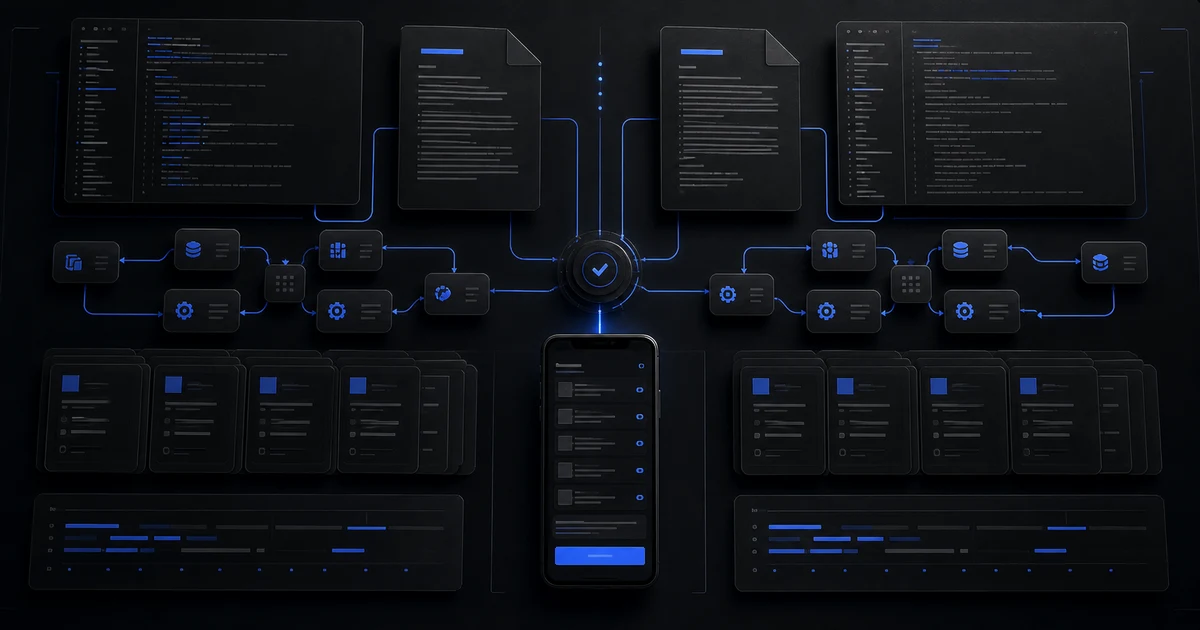
public search-demand data shows strong recent interest in "Claude Code", and the related query "claude vs claude code" is exactly the kind of confusion teams feel. People are no longer asking whether agents can code. They are asking how to keep agents useful without letting them wander.
Sources checked
- Claude Code skills documentation
- OpenAI Codex skills documentation
- Model Context Protocol documentation
The comparison that matters
Do not compare agents by demo charisma. Compare them by operational control.
| Workflow surface | Good question |
|---|---|
| Repo instructions | Does the agent know the project rules before editing? |
| Skills | Can repeated workflows be named and reused? |
| Tool access | Are GitHub, browser, build, and deploy tools scoped? |
| Review packet | Does the final answer prove what changed? |
| Stop conditions | Does the agent stop when context is missing? |
| Dirty worktree safety | Does it preserve user changes? |
AGENTS.md versus skills
AGENTS.md is the standing constitution. It tells the agent how the repo behaves: commands, style, architecture, no-touch zones, review expectations. Skills are reusable playbooks for specific jobs: fix CI, generate content, review a PR, deploy a site, create images, or perform mobile approval.
If everything goes into AGENTS.md, the file becomes a junk drawer. If everything goes into skills, the agent may miss baseline repo law. The balance is simple: stable project rules in AGENTS.md, repeated situational workflows in skills.
The review loop
A serious agent run should end with this packet:
| Field | Example |
|---|---|
| Intent | Add May 29 content batch |
| Changed files | Script, scheduled content, image assets, report |
| Tests | Build passed, live URLs 200 |
| Risks | One source returned redirect but final URL works |
| Next step | Monitor Search Console after crawl |
Where Claude Code feels strong
Claude Code's skill model is useful for named workflows. A team can define how reviews, deploys, refactors, and bug hunts should behave. The value is not the markdown file itself. The value is that the agent enters a known procedure rather than improvising.
Use it for work where style and stop conditions matter: PR review, dangerous migrations, mobile approvals, or repetitive repository chores.
Where Codex CLI feels strong
Codex-style workflows shine when the agent can inspect a repo, run commands, edit files, and verify behavior end to end. The important part is not raw autonomy. It is the loop: read, patch, test, report, and preserve unrelated changes.
Codex also benefits from explicit local skills. A deployment skill that knows the VPS queue is more valuable than a generic "deploy carefully" instruction.
MCP tools raise the stakes
MCP gives agents more hands. That is useful and dangerous. A GitHub tool, browser tool, database tool, or email tool should come with a workflow contract. What can it read? What can it mutate? What proof is required afterward?
The future is not one giant agent. It is a tool-using agent with small, sharp policies.
The Ralphable template
Use this pattern:
~~~markdown
Skill: Review Packet Required
Use when the agent changes production code or deployable content.
Must:
- State intent before editing.
- Preserve unrelated dirty files.
- Run the narrowest useful verification.
- Stop if a no-touch file must change.
- Return changed files, tests, risks, and next step.
Short beats grand. Agents follow crisp rules better than inspirational paragraphs.
FAQ
Should I choose Claude Code or Codex CLI?
Choose by workflow, not fandom. The better tool is the one that fits your repo, permissions, and review loop.
Are skills better than AGENTS.md?
They solve different problems. AGENTS.md is baseline law; skills are named procedures.
What is the biggest risk?
Unbounded agent work: broad diffs, weak tests, and no final evidence packet.
What should teams standardize first?
Final review packets and dirty-worktree safety.
Ralphable Editorial
Building tools for better AI outputs. Ralphable helps you generate structured skills that make Claude iterate until every task passes.